
A pump shaft with a scored seal land. A roll journal worn under its bearing. A hydraulic rod pitted by corrosion. Each one is a perfectly good part except for a few thousandths of an inch of missing metal, and a replacement can mean weeks of lead time and a large check. Dimensional repair coatings put the metal back.
Where parts wear
The damage is usually confined to one feature: the diameter under a seal or packing, the journal under a bearing, the fit under a sleeve or coupling, or a bore in a housing. The rest of the part is fine. That is what makes repair worthwhile: the work is concentrated on a small area, and the part keeps its original material, heat treatment and geometry everywhere else.
How the repair works
- Inspect and measure. The part is checked for runout and the worn area is measured against the print.
- Undercut. The worn surface is machined to a uniform depth below size. This removes the damaged metal and gives the coating a defined, even thickness.
- Prepare and mask. The area is degreased and grit blasted so the coating has a clean, roughened surface to bond to. Adjacent features are masked.
- Spray. Stainless steel or a nickel alloy is sprayed by twin-wire arc, flame spray, HVOF or plasma, building the surface up past its finished size.
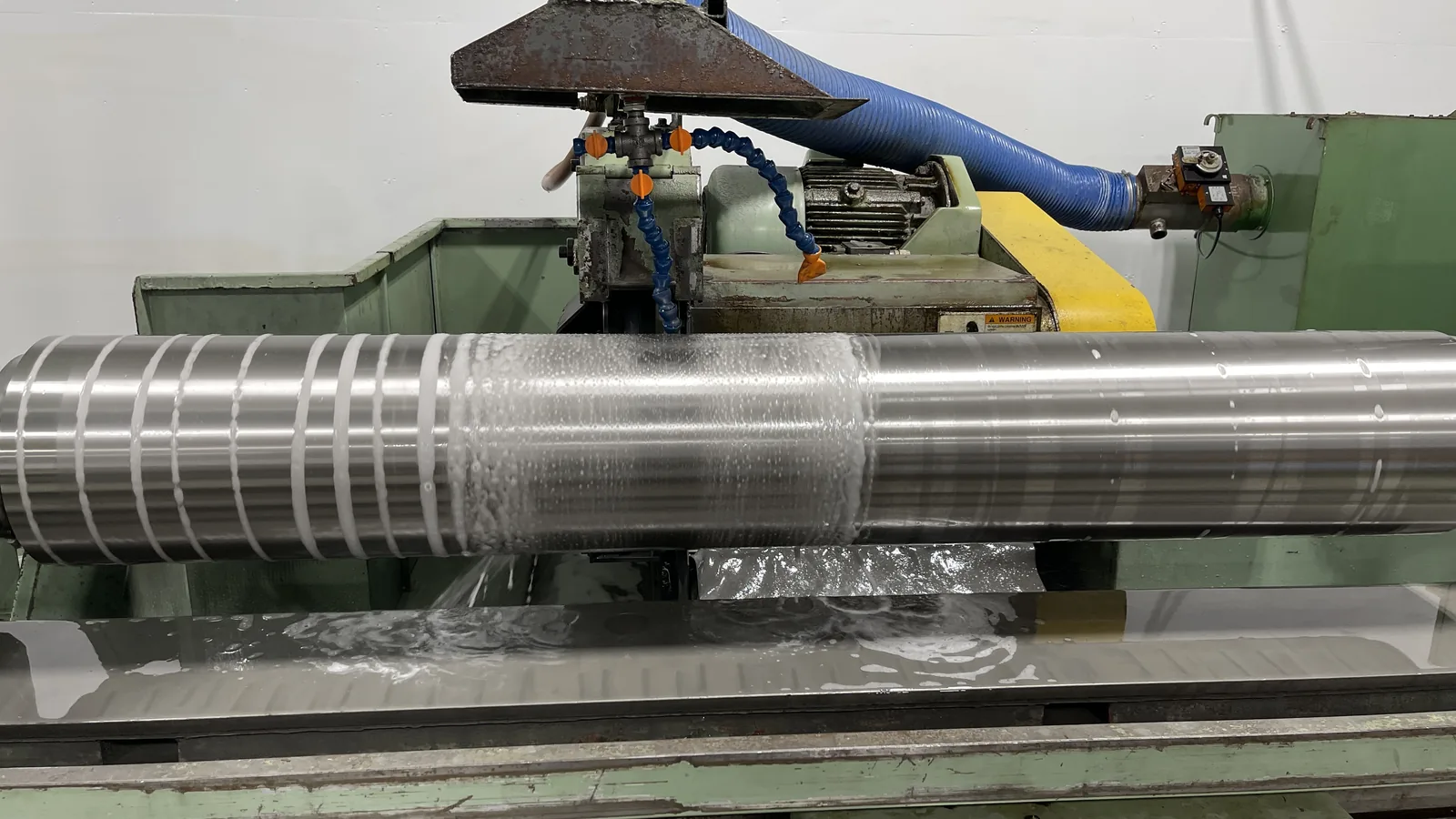
- Grind to print. The coating is ground to the finished diameter, to .0001″ on diameter where the print asks for it, and to the specified surface finish.
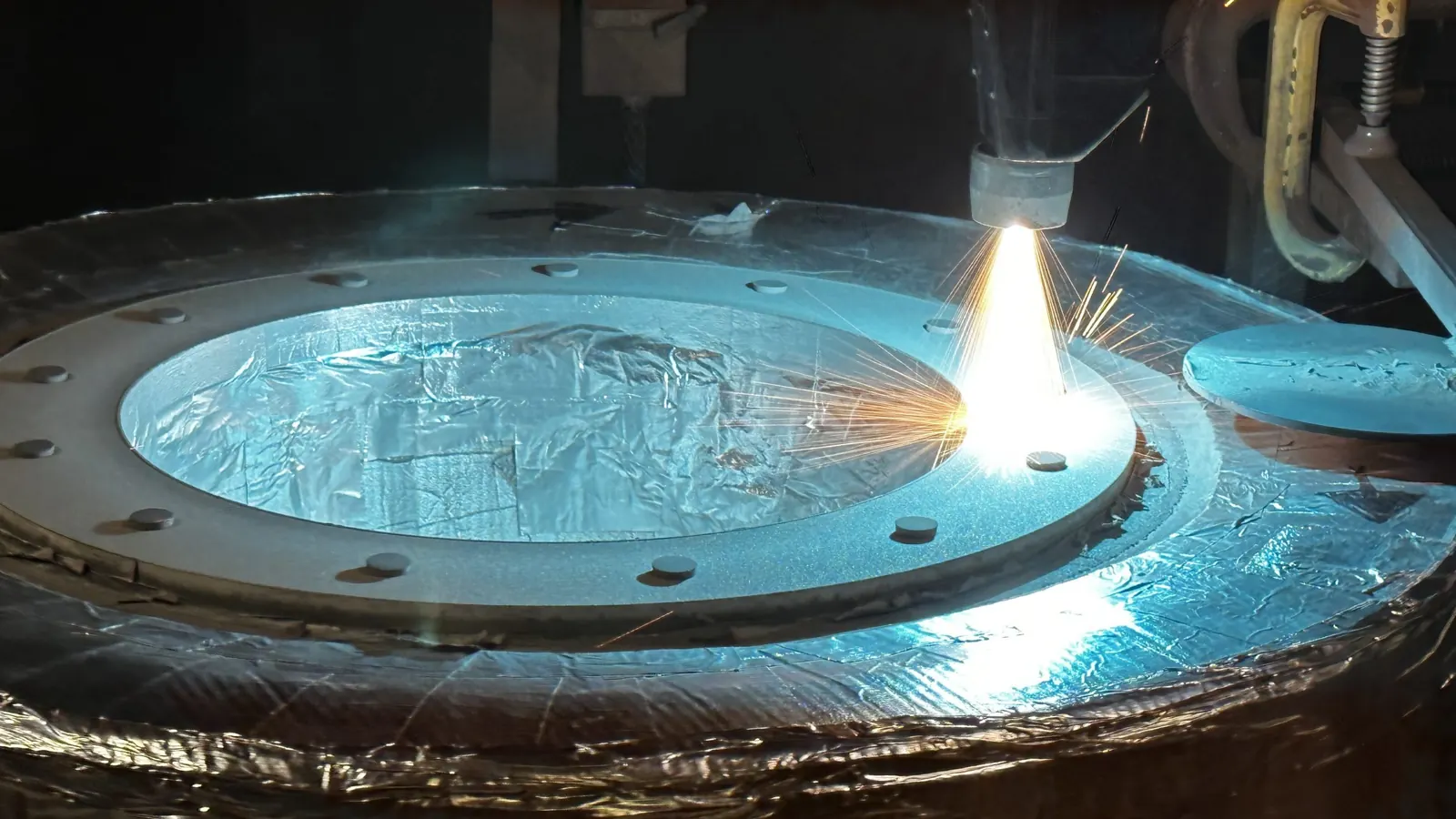
Choosing the build-up material
- Stainless steel for corrosive service: good corrosion resistance, high toughness and excellent build-up capacity, at a reasonable cost.
- Nickel alloys for corrosive environments where a machinable, corrosion-resistant surface is needed.
- A matching alloy, since virtually any alloy the base metal is made of can be sprayed.
If the drawing specifies the material, we use it. If it does not, tell us what the part sees in service and we will recommend one.
Adding a wear surface
A repaired part does not have to go back with the surface it had. Once the dimension is restored, a wear-resistant top coat can go over the metal layer: tungsten carbide or chrome carbide under a seal or bearing, or a ceramic such as chromium oxide on a pump sleeve. This is why rebuilt parts often outlast the originals, and why the same part can be brought back to size again and again.
What a coating will not do
A thermal spray coating restores a surface. It does not add strength to the shaft underneath, close a crack or straighten a bend. A cracked or badly bent shaft needs to be dealt with before it is coated, or replaced. Tell us what you know about the failure and we will tell you whether the part is a candidate.
What to send
A drawing or the nominal dimensions, photos of the worn area, the base material, and the finish and tolerance the repaired surface needs. The quote form takes drawings and photos up to 25 MB, or call 610-871-1427.
Have a worn shaft, sleeve or housing? Send photos and the print for a repair quote.