
HVOF and HVAF are both high-velocity thermal spray processes, and both are used for the same job: dense tungsten carbide and chrome carbide coatings on parts that have to resist wear. Most drawings call for HVOF, because it has been the industry standard for decades. HVAF is newer and fewer shops run it. We run both in our Allentown shop, so we see the difference every day.
The one difference that drives everything else
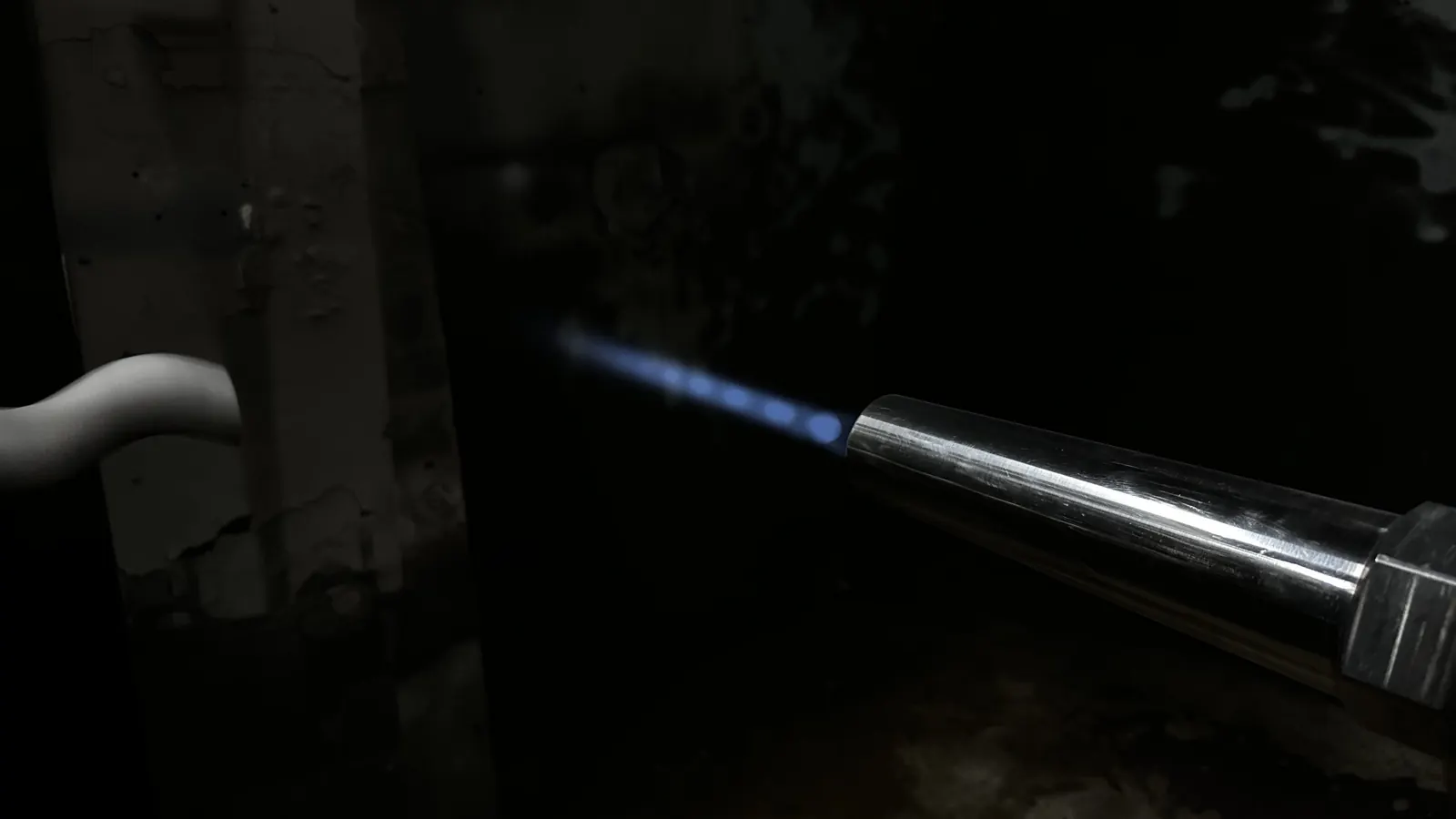
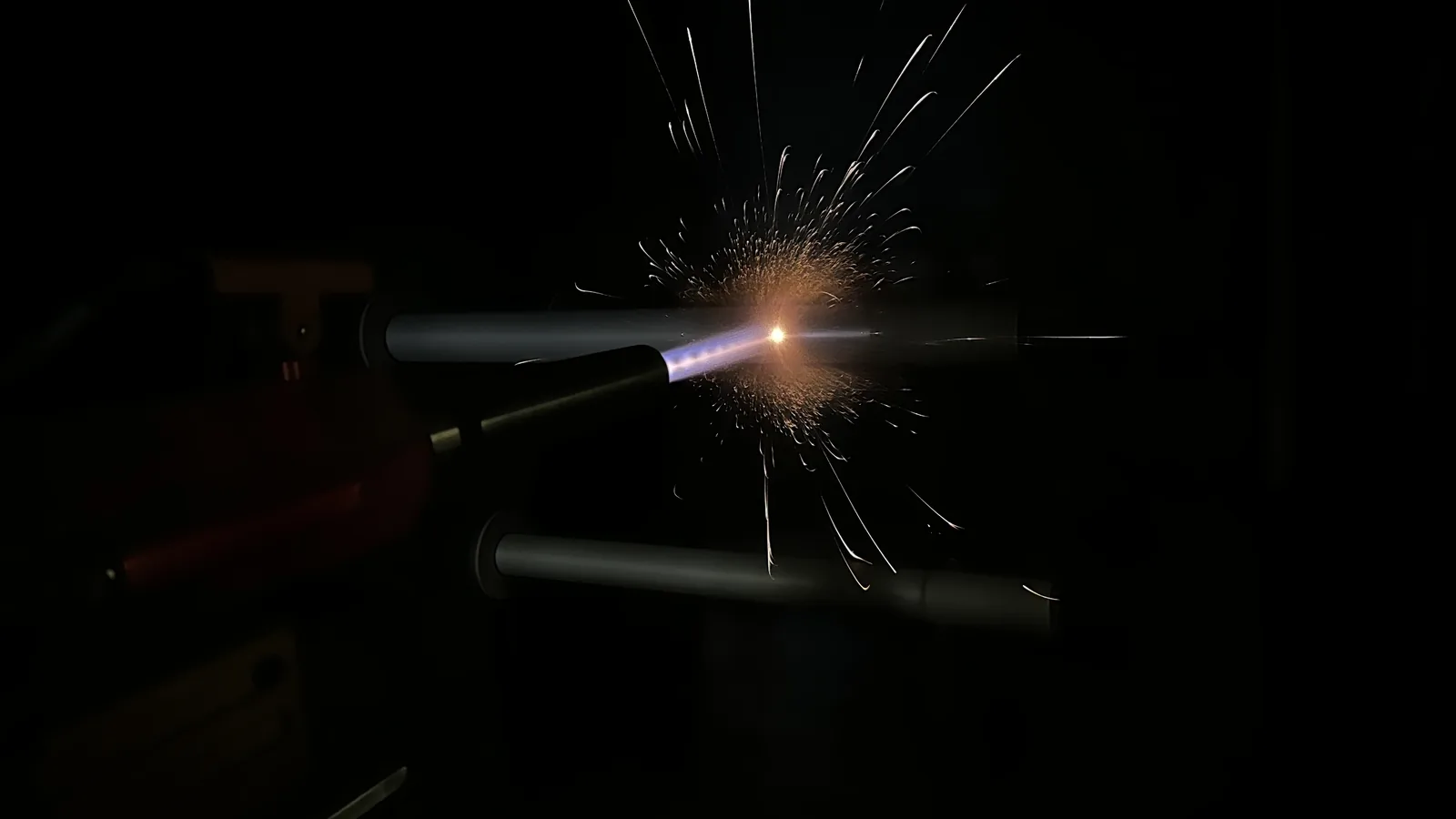
HVOF burns a fuel (kerosene, propane or hydrogen) with pure oxygen. HVAF burns propane or natural gas with compressed air. Air is roughly four-fifths nitrogen, which does not burn, so the HVAF flame is cooler. The jet is just as fast or faster: particles leave an HVAF gun at 1,000 to 1,500 meters per second, compared with around 1,000 for HVOF.
A cooler flame at the same or higher speed is the whole story. Everything else follows from it.
What the cooler flame does to carbide
Tungsten carbide does not like heat. In a hot flame some of the carbide loses carbon and turns into softer phases, and tungsten dissolves into the cobalt or nickel binder. Oxygen in the flame also oxidizes the particles in flight, and those oxides end up in the coating as thin glassy layers between the splats. HVOF coatings typically carry 2 to 4 percent oxide. HVAF coatings carry almost none, because the flame consumes nearly all of the available oxygen.
The result shows up in the hardness numbers. HVAF tungsten carbide tests at 1,250 to 1,500 HV300, against 1,000 to 1,300 for HVOF. WC-Cr₃C₂-Ni reaches 1,200 to 1,400 HV with HVAF and 900 to 1,100 with HVOF. It also shows up in service: oxide layers are where cracks start, so an oxide-free carbide coating stands up much better to impact and flexing.
| HVOF | HVAF | |
|---|---|---|
| Oxidizer | Oxygen | Compressed air |
| Fuel | Kerosene, propane or hydrogen | Propane or natural gas |
| Flame | Hotter | Cooler |
| Particle speed | About 1,000 m/s | 1,000–1,500 m/s |
| Oxide in the coating | Typically 2–4% | Virtually none |
| Tungsten carbide hardness | 1,000–1,300 HV300 | 1,250–1,500 HV300 |
Where HVOF still makes sense
HVOF is the process most specifications name, and for good reason. It has decades of service history, and it sprays a wide range of materials well: tungsten carbide, chrome carbide, nickel and cobalt alloys, and the stainless steels used for dimensional repair. If your drawing or your customer’s specification says HVOF, we apply HVOF. There is no reason to deviate from a spec that works.
Where HVAF earns its keep
- Oilfield and other high-wear parts, where extra hardness translates directly into longer service life.
- Parts that see impact or flexing, because the oxide-free coating is tougher and resists cracking.
- Thicker carbide, since HVAF builds 0.010 to 0.050″ layers routinely.
- Parts that need little or no grinding. With fine feedstock, HVAF produces coatings as smooth as 50 Ra as sprayed, or lightly polished.
- Cost. HVAF uses less fuel than HVOF and can apply thinner, high-quality layers, so it is often the more economical option.
Which one to put on the drawing
If you already have a coating specification, use it. Both processes are finished the same way: we diamond grind, diamond lap or diamond super finish the coating to your dimensions in the same building it was sprayed in.
If you do not have a specification, tell us how the part is used, what it runs against and what has failed before. We will recommend a coating and process from the ones we run. Send us the drawing or call 610-871-1427.
Have a carbide-coated part to quote? Send us the drawing, with the spec if you have one.