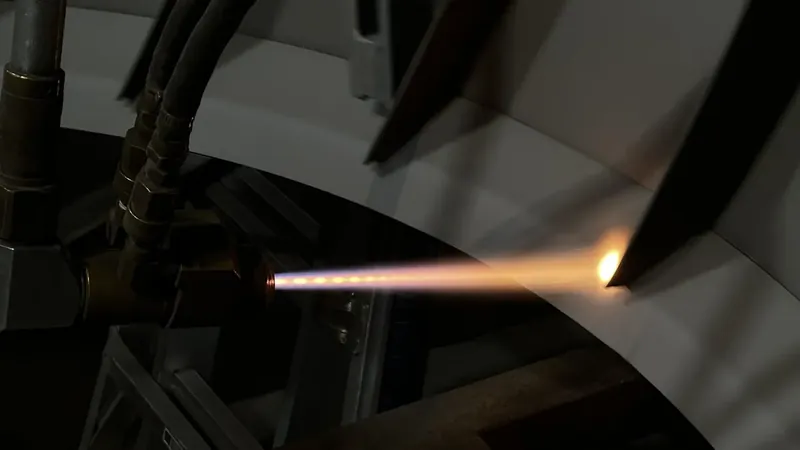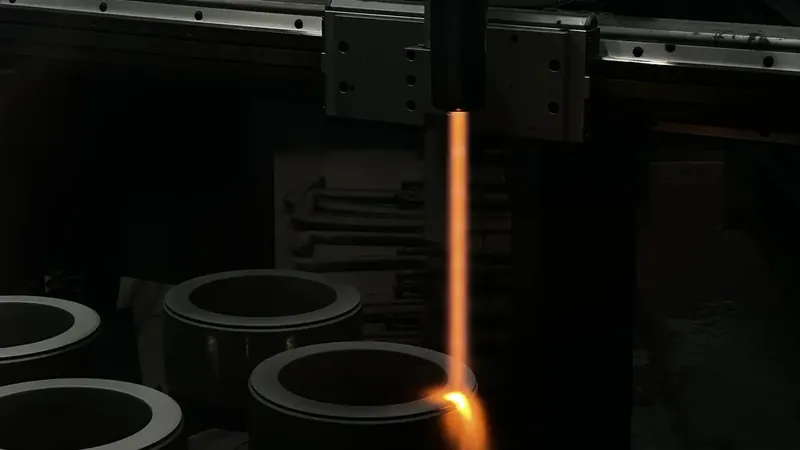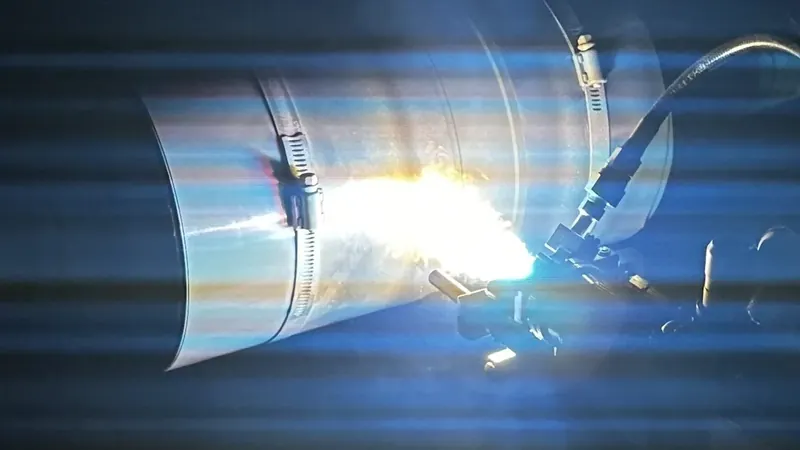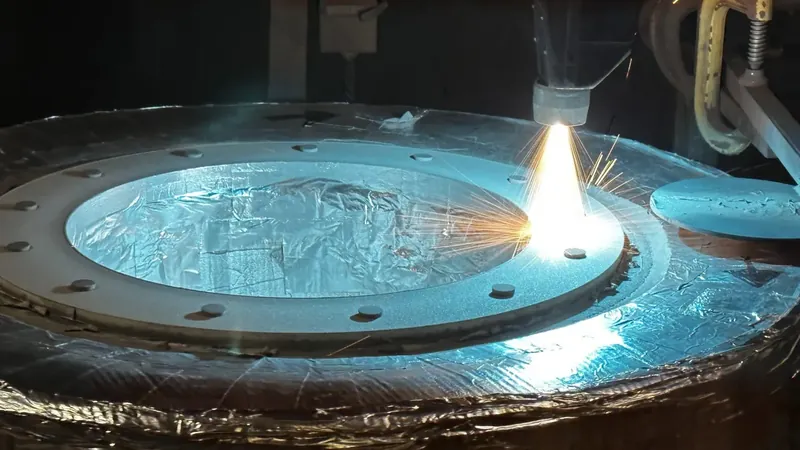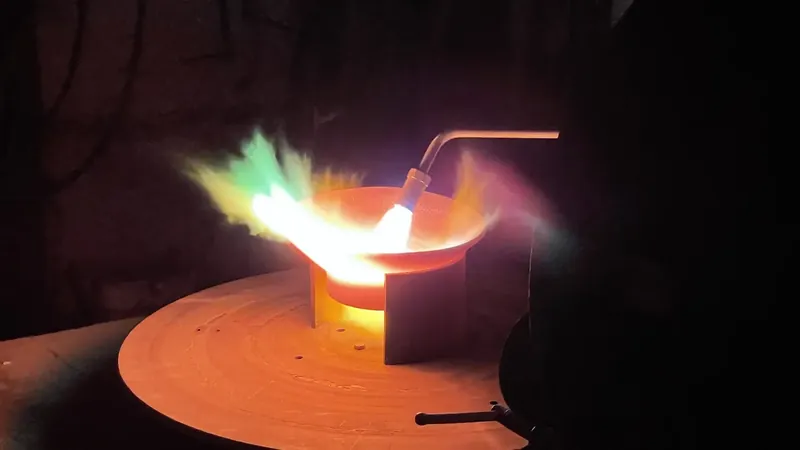
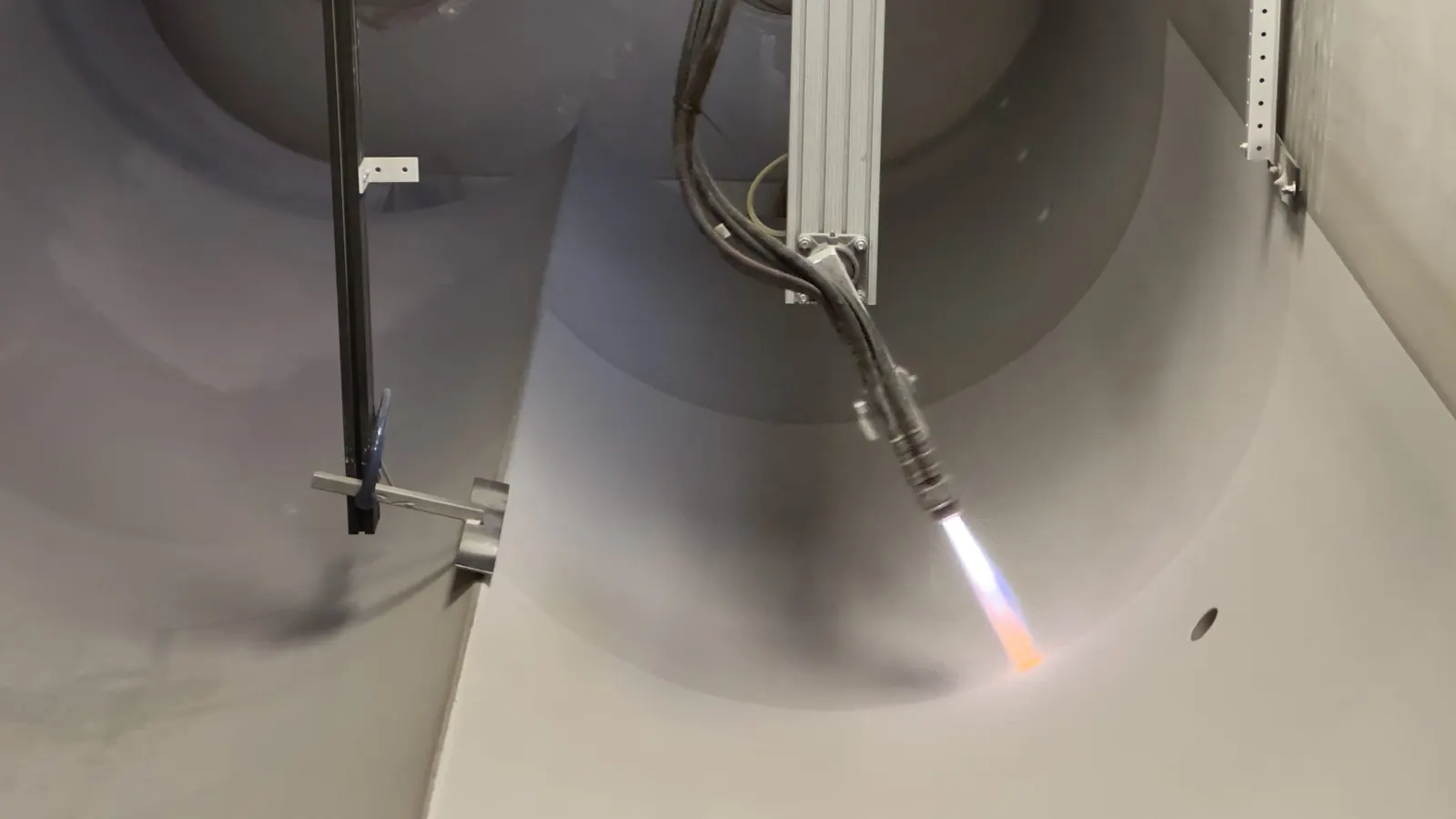
How HVOF works
Oxygen and fuel burn in a specially designed nozzle, creating a supersonic jet. Powdered coating material is injected into the jet, heated, and propelled at extreme velocity onto the part.
That speed produces remarkably dense coatings with significantly less oxide than other thermal spray methods. Short dwell time and relatively low temperatures limit oxidation of the powder in flight. The result is outstanding wear and corrosion resistance, which is why HVOF is an industry standard.
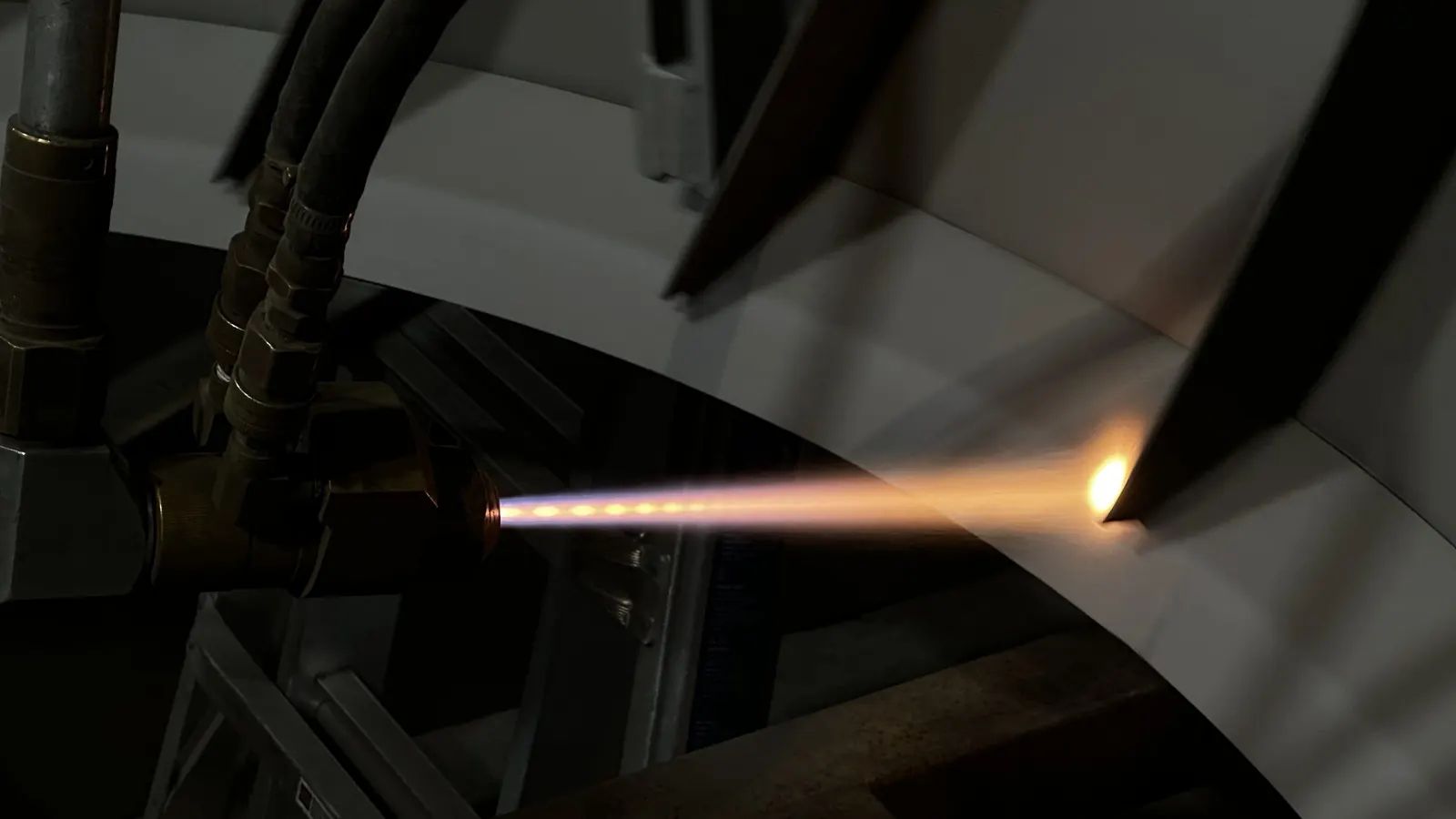
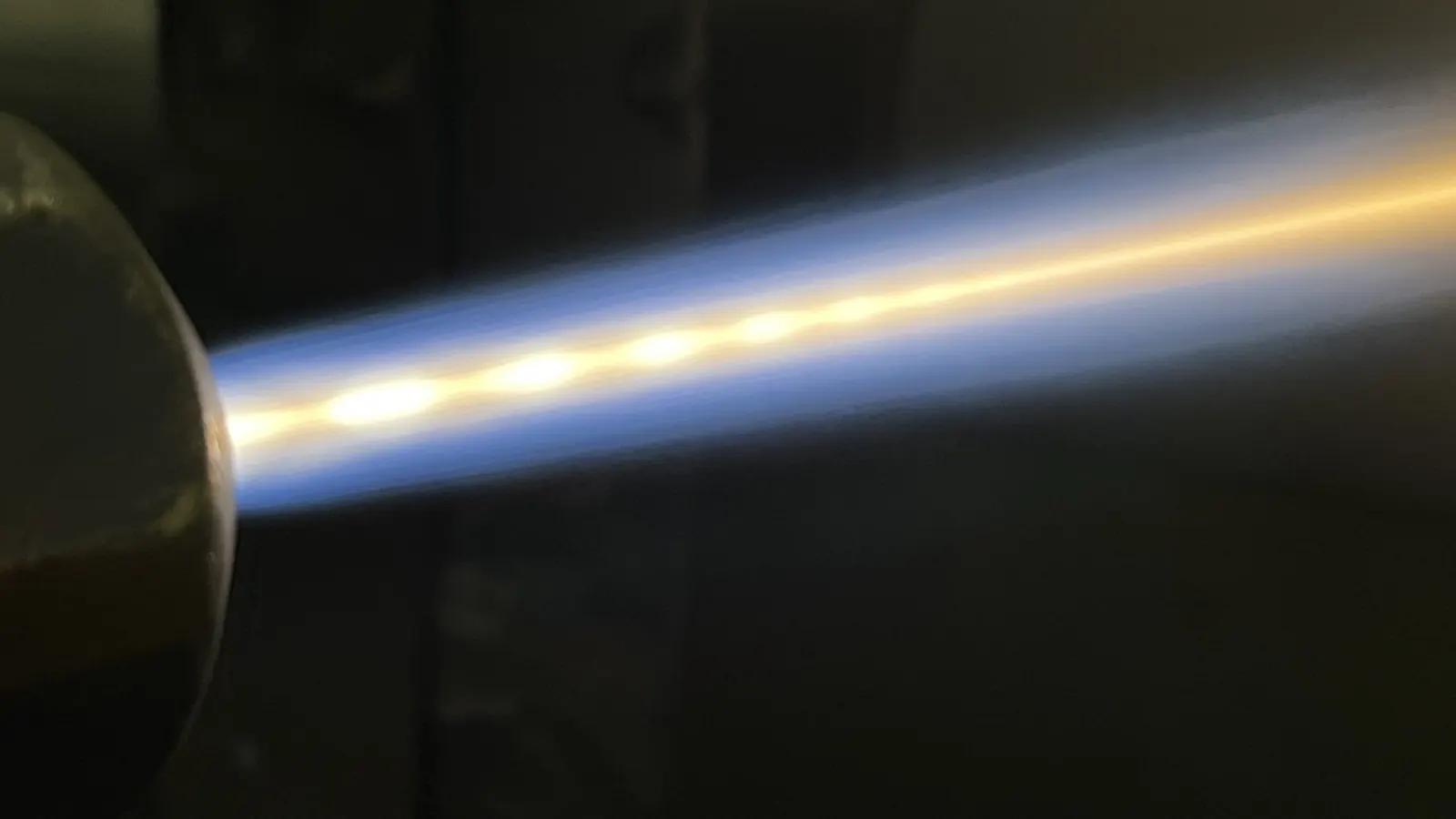
Benefits
- Wear resistance and bond strength: the high-velocity application produces a hard, strongly bonded coating for demanding service.
- Low porosity: lower porosity than other thermal spray processes.
- Corrosion resistance: dense coatings shield components from harsh conditions.
- Low oxide content: short dwell time and relatively low temperatures reduce oxidation during spraying.
- Material range: metals, alloys and carbides.
Common HVOF coating materials
| Material | Properties | Typical use |
|---|---|---|
| Tungsten carbide (WC-Co, WC-Co-Cr) | Superior wear and abrasion resistance; 1,000–1,300 HV300 (HVAF reaches 1,250–1,500) | High-wear environments; extends part life significantly |
| Chromium carbide (Cr₃C₂-NiCr) | Oxidation resistance up to 1,600 °F (870 °C); excellent corrosion and wear resistance | High-temperature, corrosive service; hard chrome replacement |
| Nickel-based alloys | Strong corrosion resistance, good bond strength, moderate hardness | Cost-effective protection in corrosive environments |
| Cobalt-based alloys | Excellent wear resistance, high toughness, corrosion resistance | Critical, high-stress components |
| Stainless steels | Strong corrosion resistance, moderate hardness, high toughness | Corrosive environments; widely used for dimensional repair |
Finished to size in-house
We diamond grind, diamond lap or diamond super finish HVOF coatings to your specifications in our own machining and finishing shop.